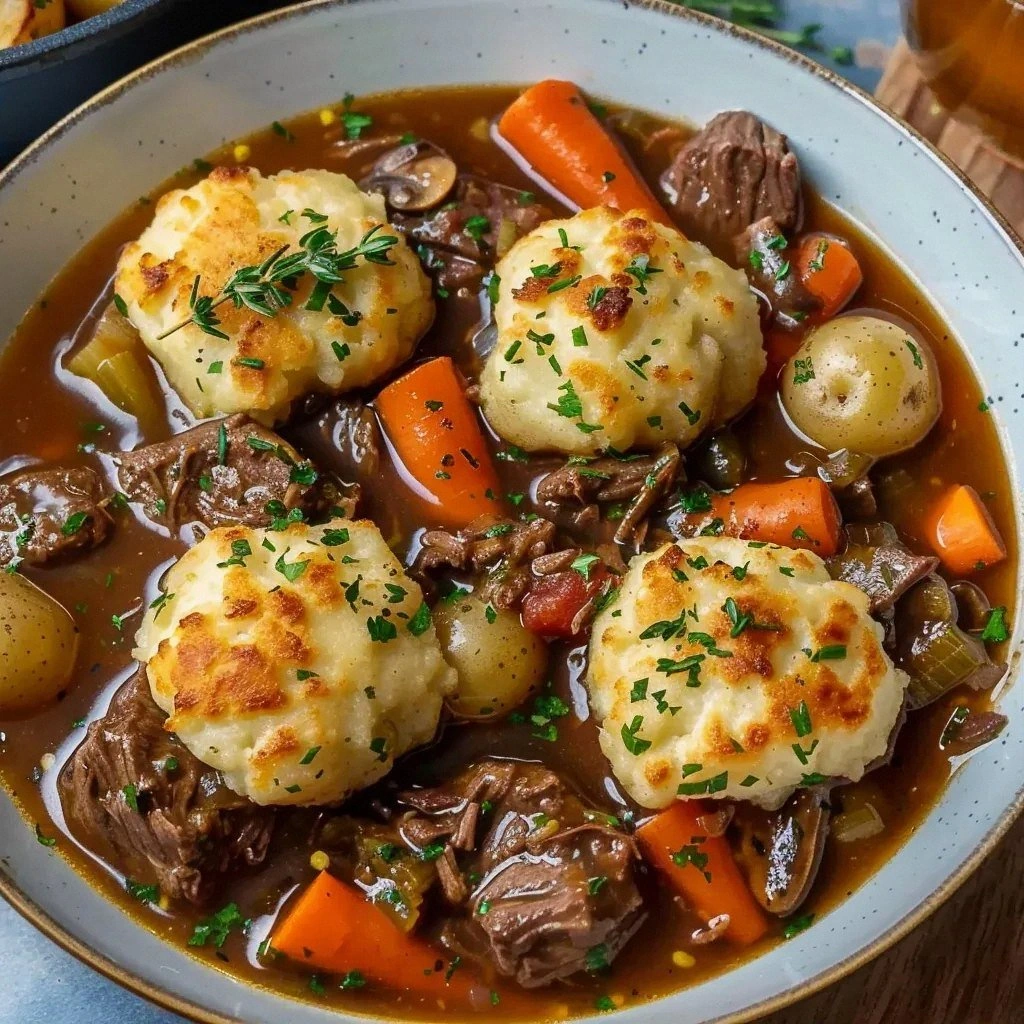
Picture this: It’s a rainy Thursday evening, the kind that makes you want to curl up with a pot of something that feels like a hug in a mug. I was halfway through a frantic grocery run, juggling a half‑baked lasagna, a forgotten bag of frozen peas, and a last‑minute craving for something hearty. I opened the fridge, stared at the chuck roast that had been sitting there since last week, and thought, “Why not turn this into a stew that will make the whole house smell like a cozy Irish pub?” The moment the meat hit the pan, the sizzle was a promise of something extraordinary, and the aroma of thyme and rosemary began to dance through the kitchen like mischievous sprites. My friends were skeptical—“Irish stew? With cheese?”—but I was already dreaming of the first spoonful. This version isn’t just a recipe; it’s a confession that I’ll be honest — I ate half the batch before anyone else got to try it. The secret? A touch of stout, a splash of cheddar, and a dumpling that rises like a cloud. Let me walk you through every single step — by the end, you’ll wonder how you ever made it any other way.
My kitchen was a battlefield that night. I had just finished browning the chuck roast when I realized I’d forgotten to trim the fat. The pan was a mess of browned bits and splattering oil, but I didn’t stop. I added onions, and the kitchen filled with that sweet, caramelizing aroma that says, “We’re about to do something good.” The garlic went in next, and the kitchen was suddenly smelling like a forest after a rainstorm. I poured in the tomato paste, letting it mingle with the beef stock until the mixture thickened into a velvety sauce that coated the meat like velvet. The stout beer hit the pot with a hiss, releasing a deep, malty sweetness that made my eyes water in the best way. I added bay leaves, carrots, potatoes, celery, and mushrooms, and the stew began to simmer. The moment the broth turned a rich amber, I knew I was onto something special—this is hands down the best version you'll ever make at home.
The first bite was a revelation. It was the way the beef was so tender it practically fell apart, the vegetables were perfectly cooked, and the cheddar had melted into a silky, golden blanket over the dumplings. I dared you to taste this and not go back for seconds, and I did. The broth had a depth that made you think of a centuries‑old family secret. The dumplings were airy and fluffy, a contrast to the dense, savory stew that wrapped around them. The final touch of chives added a bright, fresh note that cut through the richness. I felt like I was sitting in a small Irish pub, the fire crackling, the locals laughing, and the stew on the table. The experience was almost cinematic—so I made a note to share it with you because if you've ever struggled with this, you're not alone—and I've got the fix.
What sets this recipe apart is not just the ingredients, but the way they interact. It’s the combination of stout and cheddar that creates a layered flavor profile that feels both comforting and adventurous. The dumplings, made from Bisquick and cheddar, rise like clouds and add a surprising textural contrast. The slow simmer allows the beef to become melt‑in‑your‑mouth tender while the vegetables soften to a caramelized sweetness. The use of fresh herbs versus dried gives a bright, aromatic finish that keeps the stew from feeling flat. The broth is thickened naturally by the tomato paste and the reduction of the stout, so you don’t need any artificial thickeners. The final sprinkle of chives gives a fresh lift that balances the richness. Every bite feels like a story, a memory of a rainy night and the warmth of a hearth. If you’re looking for a dish that’s both comforting and bold, this is it.
What Makes This Version Stand Out
- Taste: The deep, malty undertone from the stout beer complements the savory beef and caramelized onions, creating a broth that feels like a warm hug.
- Texture: The dumplings rise to a light, airy center that contrasts with the dense, tender meat and softened vegetables.
- Ingredient Quality: Fresh herbs, high‑quality cheddar, and a good stout beer elevate the dish from ordinary to extraordinary.
- Ease of Prep: The recipe uses pantry staples like Bisquick and tomato paste, making it approachable for any cook.
- Make‑Ahead Potential: The stew can be cooked ahead and reheated, and the dumplings can even be made in advance.
- Audience Appeal: It’s a crowd‑pleaser that works for family dinners, potlucks, or a cozy night in.
Alright, let’s break down exactly what goes into this masterpiece...
Inside the Ingredient List
The Flavor Base
Olive oil, onions, garlic, and tomato paste form the foundation. They caramelize together, creating a rich, savory base that grounds the stew. If you skip the tomato paste, the broth will be thin and lack depth. The olive oil helps the aromatics release their flavors, and the garlic adds a subtle heat that balances the sweetness of the onions. The tomato paste thickens the sauce naturally, so you don’t need to add flour or cornstarch. A small pinch of salt at this stage is essential to bring out the flavors. The base is the canvas upon which all other flavors paint their stories.
The Texture Crew
Beef stock, stout beer, carrots, potatoes, celery, and mushrooms give the stew its hearty body. Beef stock is the backbone; it adds richness and depth. The stout beer introduces a malty sweetness and a subtle bitterness that balances the broth. Carrots and potatoes provide a sweet, earthy counterpoint to the savory meat. Celery adds a subtle crunch and herbal note. Mushrooms bring umami and a meaty texture that enhances the overall mouthfeel. Together, they create a stew that feels like a comforting hug.
The Unexpected Star
Cheddar cheese and Bisquick are the game‑changers. Cheddar melts into the dumplings, creating a gooey, savory center that contrasts with the broth’s thickness. Bisquick, an all‑purpose baking mix, gives the dumplings a light, airy texture without the need for yeast or baking powder. If you’re vegan, you can replace cheddar with a plant‑based cheese and use a non‑dairy Bisquick alternative. The combination of cheese and Bisquick is what turns this stew from a simple dish into a culinary masterpiece. The dumplings rise to a fluffy, golden top that is a visual treat.
The Final Flourish
Chives, garlic powder, and black pepper finish the dish with a bright, fresh kick. Chives add a subtle oniony freshness that cuts through the richness of the stew. Garlic powder is added in the final stages to give a subtle, all‑round garlic flavor without the intensity of fresh cloves. Black pepper provides a gentle heat that balances the sweetness of the carrots and the depth of the stout. A splash of milk at the end helps to round out the broth and add a creamy texture. The final touch is a sprinkle of fresh chives that gives a bright, fresh note. This combination ensures every bite is balanced and flavorful.
Everything's prepped? Good. Let's get into the real action...

The Method — Step by Step
- Brown the meat: Heat 1/3 cup olive oil in a large Dutch oven over medium‑high heat. Add the 3 lb chuck roast cubes, letting them sear on all sides until a deep brown crust forms. This step is critical for flavor; the Maillard reaction creates a caramelized flavor that will carry through the stew. Keep the heat steady—if it’s too hot, the meat will burn before it cooks through. Let the meat rest for a few minutes before moving on.
- Sauté aromatics: Add the diced onions to the pot and cook until translucent, about 5 minutes. Stir in the minced garlic and let it bloom for 1 minute, releasing its fragrant oils. The onions should be golden and slightly caramelized, not raw. This step builds a savory base that will anchor the stew. A quick pinch of salt helps draw out moisture from the onions. The aroma should fill the kitchen like a comforting promise.
- Deglaze with stout: Pour in 2 cups of stout beer, scraping the bottom of the pan to loosen the browned bits. The beer should hiss and steam, releasing a deep, malty aroma. Allow the beer to reduce by half, concentrating its flavor. This reduction will become the backbone of your broth. If you’re short on stout, a dark beer or even a splash of red wine can work, but the stout’s bitterness is key. The liquid should look like a rich amber.
- Add stock and herbs: Stir in 6 cups of beef stock, 2 bay leaves, 1 tbsp thyme, 1 tbsp rosemary, and 1/2 tsp black pepper. Bring the mixture to a gentle simmer. The stock should be rich and aromatic, the herbs should release their essential oils. Keep the heat low to avoid boiling; you want a steady, gentle simmer. The broth should be fragrant and slightly thickened. Let the flavors meld for 5 minutes.
- Introduce vegetables: Add the sliced carrots, cubed potatoes, diced celery, and sliced mushrooms. Stir gently to coat the veggies in the broth. Cover the pot and reduce the heat to low. Let the stew cook for 1.5 to 2 hours, or until the meat is fork‑tender and the vegetables are soft. Check occasionally and stir to prevent sticking. The broth should thicken slightly as the vegetables release their starches.
- Make dumplings: While the stew simmers, combine 2 cups Bisquick, 1 tsp garlic powder, 1 cup shredded cheddar cheese, 3/4 cup milk, and a pinch of salt. Stir until a sticky dough forms. Drop spoonfuls of the dough onto the surface of the stew, spacing them about 2 inches apart. The dumplings should rise and become fluffy. Cover the pot and let them steam for 10–12 minutes. The steam will cook the dumplings thoroughly. Watch for the edges; they should be golden and airy.
- Finish the broth: Remove the bay leaves and stir in 1/4 cup chopped chives. Taste and adjust seasoning with salt and pepper as needed. If the broth feels too thick, add a splash of milk to thin it slightly. The final broth should be silky, slightly thick, and full of complex flavors. The dumplings should be tender, the meat melt‑in‑your‑mouth, and the vegetables should be perfectly cooked.
- Serve and garnish: Ladle the stew into bowls, ensuring each bowl has a generous portion of meat, vegetables, and dumplings. Sprinkle additional chives on top for a burst of color and freshness. Serve hot, perhaps with crusty bread for dipping. The aroma alone will make your guests swoon. Remember, I dare you to taste this and not go back for seconds. The first bite will set the tone for the rest of the meal.
That's it — you did it. But hold on, I've got a few more tricks that'll take this to another level...
Insider Tricks for Flawless Results
The Temperature Rule Nobody Follows
Keep the heat low once you add the dumplings. Many cooks think a higher heat will speed up cooking, but it actually causes the dumplings to become dense. A gentle, steady simmer preserves the dumplings’ airy texture and allows the broth to absorb flavors without scorching. If you notice the liquid starting to reduce too quickly, lower the flame or cover the pot. This trick keeps the stew from drying out and ensures the dumplings remain tender.
Why Your Nose Knows Best
Smell the broth at every stage. If it smells like a forest after a rainstorm, you’re on the right track. The aroma should evolve from caramelized onions to a deep, malty richness as the stout reduces. When the dumplings are done, a faint nutty scent from the Bisquick should emerge. Trust your nose; it’s a reliable guide to when the stew is ready. A well‑aromaed stew is a sign of balanced flavors.
The 5‑Minute Rest That Changes Everything
Let the stew rest for 5 minutes before serving. This allows the flavors to meld and the dumplings to settle. The broth will thicken slightly during this brief rest, creating a richer mouthfeel. The dumplings will absorb some of the broth, becoming even more flavorful. If you’re in a rush, you can skip this step, but the result will feel a bit flat. A short rest is a small price for a dramatic flavor boost.
Keep the Dumplings Light
Use a light hand when adding milk to the dumpling mix. Too much milk will make the dough heavy and dense. A splash of milk is enough to bind the ingredients without weighing them down. If you’re looking for a dairy‑free version, substitute with almond or oat milk, but keep the amount minimal. The key is to achieve a sticky but not watery dough. This ensures the dumplings rise beautifully.
Avoid Over‑Seasoning Early
Hold back on salt until the final tasting. Adding salt early can draw moisture from the vegetables, causing the stew to become watery. It also can make the beef tough if it’s too salty. Taste the broth after the dumplings are done and add salt to taste. This final touch ensures the stew is perfectly balanced and not overly salty.
Creative Twists and Variations
This recipe is a playground. Here are some of my favorite ways to switch things up:
Mushroom‑Rich Version
Swap the beef stock for mushroom stock. Add an extra cup of sliced shiitake mushrooms to the stew. The result is a deep, umami‑filled broth that pairs wonderfully with the cheddar dumplings. This version is perfect for a vegetarian dinner if you replace the chuck roast with a hearty plant‑based protein.
Herb‑Infused Twist
Use a mixture of fresh herbs like parsley, sage, and tarragon. Replace the dried thyme and rosemary with fresh herbs for a brighter, fresher flavor profile. Add the fresh herbs at the end of cooking to preserve their delicate aromas. The stew will taste like a spring garden, even in winter.
Spicy Kick
Add a pinch of crushed red pepper flakes or a diced jalapeño. The heat will cut through the richness of the stew and give it a lively bite. Pair this version with a cool cucumber yogurt dip to balance the spice. The jalapeño also adds a subtle sweetness that complements the stout.
Cheese‑Free Dumplings
Replace the cheddar with a plant‑based cheese or omit it entirely. Use a vegan Bisquick alternative and a splash of plant‑based milk. The dumplings will still rise beautifully, and the stew will remain hearty. This version is perfect for a dairy‑free dinner.
Sweet Potato Variation
Swap the regular potatoes for sweet potatoes. The sweet potatoes add a subtle sweetness that balances the stout’s bitterness. They also provide a vibrant color contrast. This version is especially good for fall or winter when you want a dish with a warm, comforting vibe.
Lamb Variant
Replace the chuck roast with lamb shoulder. Lamb’s distinct flavor pairs beautifully with the stout and cheddar. Use the same cooking method, but reduce the cooking time slightly to avoid overcooking the lamb. The result is a traditional Irish stew with a twist.
Storing and Bringing It Back to Life
Fridge Storage
Cool the stew to room temperature before refrigerating. Store it in an airtight container for up to 4 days. The dumplings may slightly firm up, but they’ll regain their fluffiness when reheated. When reheating, add a splash of water to loosen the broth. This keeps the stew from drying out.
Freezer Friendly
Freeze the stew in portioned containers for up to 3 months. Before freezing, let the stew cool completely. Label each container with the date. Thaw overnight in the fridge or use the defrost setting on your microwave. Reheat on the stovetop, adding a splash of water or broth to maintain moisture.
Best Reheating Method
Reheat slowly over low heat. Stir frequently to prevent sticking. Add a tiny splash of water or milk to keep the broth silky. When the stew is hot, taste and adjust seasoning if needed. The dumplings will soften slightly, but the overall texture remains comforting. Serve immediately for best results.