I was standing in my tiny kitchen, a half‑finished pot of bland chicken broth simmering on the back burner, when my roommate tossed a challenge over her shoulder: “If you can turn that into something that makes me forget my own name, I’ll buy you tacos for a month.” I laughed, I doubted, and then I remembered that one night in Oaxaca when I first tasted tinga—smoky, tangy, and just the right kind of messy. The memory hit me like a wave of cumin and chipotle, and I knew I had to recreate that magic before the clock struck midnight. The whole apartment filled with the scent of roasted tomatoes and the faint, seductive whisper of adobo, and I could swear the walls were leaning in to listen. This is the moment I realized that a simple chicken tinga could become a full‑blown culinary anthem, and I was determined to make it the best version you’ll ever taste.
Picture this: a skillet humming as the olive oil hits the pan, the onions turning translucent and then caramelizing into sweet, amber ribbons, while the chipotle peppers sizzle and release a smoky perfume that makes you want to hug the stove. The chicken, once boiled to tender perfection, is shredded and tossed into that ruby‑red sauce, soaking up every drop like a sponge at a summer pool party. When you finally spoon the mixture onto warm corn tortillas, sprinkle Cotija cheese, and finish with a burst of fresh cilantro, you’ve got a dish that sings louder than a mariachi band on a rooftop. I dare you to taste this and not go back for seconds; I’ll be honest — I ate half the batch before anyone else got a chance to try it.
Most tinga recipes out there either over‑cook the chicken, drown the sauce in too much liquid, or skip the essential step of letting the flavors marry for a few minutes. Here’s what actually works: I start by poaching the chicken in a lightly seasoned broth, then I reserve that golden liquid to thin the sauce just enough for a glossy finish. The secret weapon? A splash of the chicken broth at the very end, which transforms a good sauce into a velvety, cling‑to‑the‑tortilla masterpiece. If you’ve ever struggled with a watery, flavorless tinga, you’re not alone — and I’ve got the fix. Okay, ready for the game‑changer?
Let me walk you through every single step — by the end, you’ll wonder how you ever made it any other way. I’ll share the exact measurements, the precise timing, and a handful of tricks that will make your kitchen feel like a five‑star Mexican taquería. Stay with me here — this is worth it, because the payoff is a bowl of comfort that can turn any ordinary weeknight into a celebration. Picture yourself pulling this out of the pan, the whole kitchen smelling incredible, and the first bite delivering that perfect balance of heat, acidity, and smoky depth. Ready? Let’s dive in.
What Makes This Version Stand Out
- Taste: The combination of chipotle adobo and fresh tomatoes creates a smoky‑sweet profile that dances on the palate without overwhelming it.
- Texture: Shredded chicken stays juicy thanks to the poaching broth, while the sauce clings like velvet to every strand.
- Simplicity: Fewer than ten ingredients, all pantry‑friendly, mean you can pull this together on a Tuesday after work.
- Uniqueness: The reserved chicken broth added at the end gives the sauce a silk‑like sheen that most recipes miss.
- Crowd Reaction: Guests often claim they’ve never tasted anything like it, and they’ll be asking for the recipe before the plate is empty.
- Ingredient Quality: Using ripe Roma tomatoes and authentic chipotle peppers in adobo makes a world of difference.
- Cooking Method: A two‑step approach—poach then sauté—locks in moisture and builds layers of flavor.
- Make‑Ahead Potential: The sauce improves after a few hours, so you can prep the night before and just reheat.
Inside the Ingredient List
The Flavor Base
The backbone of any great tinga is the sauce, and that starts with the humble onion and garlic. The ¼ large onion and the first set of 2 whole garlic cloves are sautéed until they turn fragrant, laying a sweet foundation that balances the heat from the chipotle. If you skip these, you’ll miss the subtle caramel notes that make the sauce feel rounded rather than one‑dimensional. For a deeper flavor, try using a mix of white and red onions; the red will add a faint sweetness that pairs beautifully with the smoky peppers. When selecting onions, look for firm bulbs with dry skins—no soft spots, as those indicate moisture loss and can dilute the sauce.
The Texture Crew
Shredded chicken is the star, and the amount—1½–2 pounds boneless—gives you enough meat to feed a crowd without becoming wasteful. Poaching the chicken in a lightly salted broth (1 tsp kosher salt plus a bay leaf) keeps it tender and infuses it with subtle seasoning. If you’re short on time, you can use rotisserie chicken, but be aware that the added spices may clash with the delicate balance we’re aiming for. The ½ cup reserved chicken broth added later is the secret glue that binds the sauce to the meat, creating that glossy finish. Remember, the broth should be warm, not cold, to avoid shocking the sauce and causing it to seize.
The Unexpected Star
Chipotle peppers in adobo sauce are the game‑changer here. Two tablespoons pack a punch of smoky heat, but they also bring a subtle sweetness that lifts the entire dish. If you’re sensitive to spice, you can halve the amount and still retain that signature flavor. The dried Mexican oregano and ground cumin each add a whisper of earthiness that rounds out the heat. For a twist, try swapping the oregano for fresh thyme; the fresh herb adds a bright, almost citrusy note that surprises the palate in the best way.
The Final Flourish
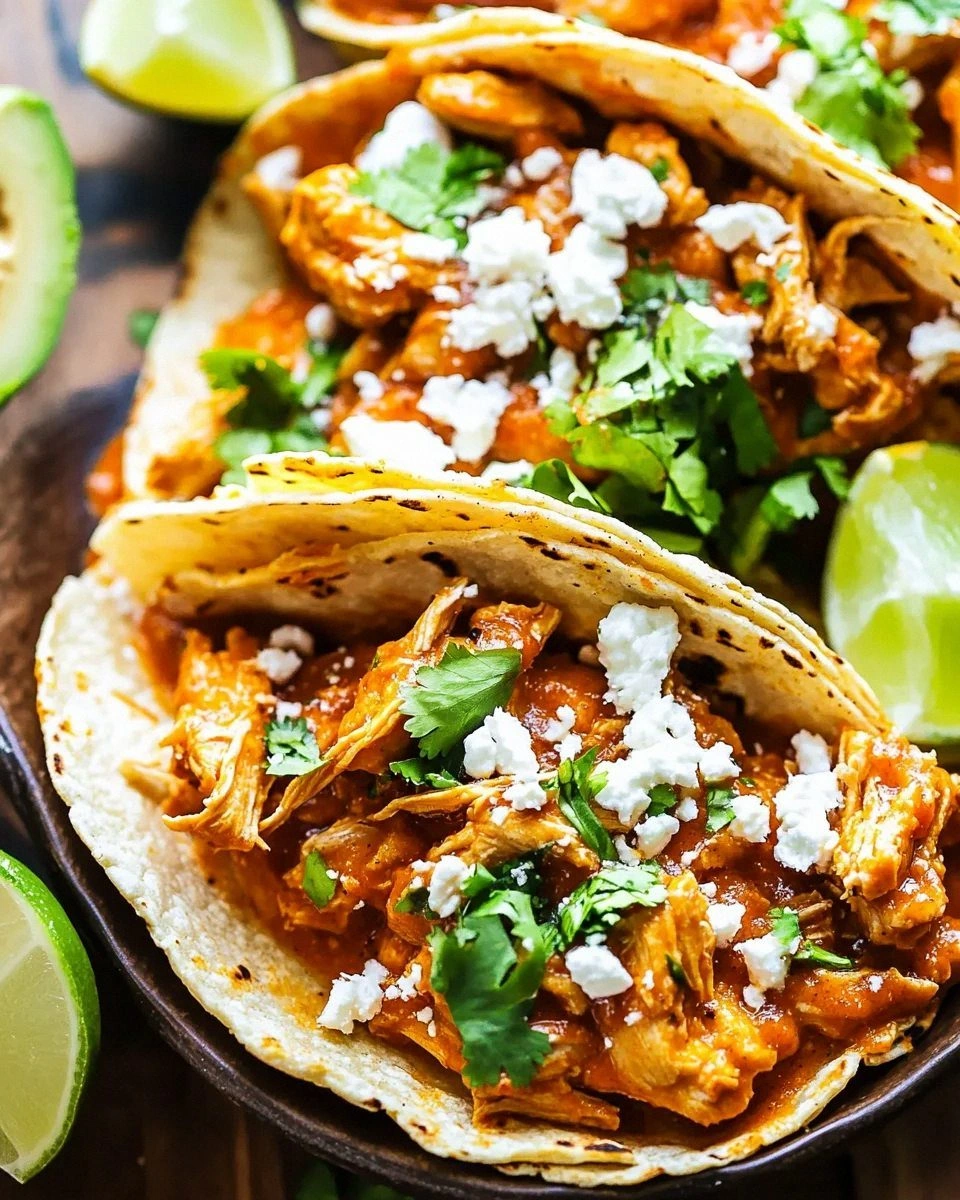
The finishing touches—warm corn tortillas, crumbled Cotija cheese, diced white onion, chopped cilantro, and diced avocado—transform a simple stew into a handheld masterpiece. Warm the tortillas just before serving; a cold tortilla will soak up the sauce and become soggy, while a hot one stays pliable and slightly crisp at the edges. Cotija cheese adds a salty, crumbly contrast that cuts through the richness of the sauce. A sprinkle of fresh onion and cilantro brings brightness, and the creamy avocado adds a buttery coolness that balances the heat. If you can’t find Cotija, a good substitute is feta; it’s slightly tangier but still provides that essential salty crumble.
Everything's prepped? Good. Let’s get into the real action…
The Method — Step by Step
Start by preparing the poaching liquid: fill a large pot with enough water to cover the chicken, add 1 teaspoon kosher salt, a bay leaf, and the ¼ large onion (quartered). Bring it to a gentle boil, then lower the heat so the water simmers. Slip the 1½–2 pounds of boneless chicken into the broth, making sure it’s fully submerged. Let it cook for 12‑15 minutes, or until the meat is opaque and easily shreds with a fork. This gentle poach locks in moisture and infuses the meat with a subtle savory backbone.
Kitchen Hack: Use a kitchen thermometer to keep the broth at a steady 180°F–190°F; this prevents the chicken from toughening.While the chicken is poaching, dice the 1 large white onion and mince the second set of 2 garlic cloves. Heat 1 tablespoon olive oil in a large skillet over medium‑high heat. Add the onion, stirring constantly until it becomes translucent, about 3 minutes, then add the garlic and sauté for another 30 seconds until you hear that satisfying sizzle.
Now it’s time for the tomatoes. Roughly chop the 4 large Roma tomatoes and add them to the skillet. Cook, stirring occasionally, until the tomatoes break down and their juices thicken, roughly 7‑8 minutes. The aroma at this stage should be bright and slightly sweet, a clear sign the tomatoes are releasing their natural sugars.
Stir in 2 tablespoons of chipotle peppers in adobo sauce, the 1 teaspoon dried Mexican oregano, the additional 1 teaspoon kosher salt, and 1 teaspoon ground cumin. Let the mixture bubble gently for 2‑3 minutes; you’ll notice the sauce darkening and the kitchen filling with that unmistakable smoky perfume. This is the moment of truth—if the sauce isn’t smelling like a Mexican street market, add a pinch more salt.
Watch Out: Be careful not to over‑cook the chipotle; burning it will introduce a bitter, burnt flavor that ruins the balance.When the chicken is done, remove it from the pot and let it rest for a couple of minutes. Then, using two forks, shred the meat into bite‑size strips. Reserve ½ cup of the poaching broth; you’ll use this to adjust the sauce’s consistency later.
Add the shredded chicken to the skillet, tossing it gently to coat every strand with the smoky tomato‑chipotle mixture. Pour in the reserved ½ cup chicken broth and stir. Let the whole thing simmer on low heat for about 5 minutes, allowing the flavors to meld. At this point, the sauce should cling to the chicken like a glossy glaze, and you’ll notice a slight thickening as the broth reduces.
While the tinga simmers, warm your corn tortillas. The best method is to heat a dry skillet over medium heat, lay a tortilla down, and flip after 30 seconds when you see tiny brown spots. Keep them stacked in a clean kitchen towel to stay warm and pliable.
To serve, spoon a generous heap of the chicken tinga onto each warm tortilla. Top with a crumble of Cotija cheese, a scatter of diced white onion, a handful of chopped cilantro, and a few cubes of fresh avocado. The contrast of hot, smoky chicken with cool, creamy avocado is pure magic. Serve immediately, and watch your guests dive in with gusto.
Kitchen Hack: If you’re prepping for a crowd, keep the assembled tacos in a low oven (200°F) on a sheet pan; they’ll stay warm without continuing to cook.
That’s it — you did it. But hold on, I’ve got a few more tricks that’ll take this to another level…
Insider Tricks for Flawless Results
The Temperature Rule Nobody Follows
Never drop cold ingredients into a hot pan; the sudden temperature shock can cause the sauce to seize and become grainy. Keep the shredded chicken and the reserved broth at room temperature, or gently warm them before adding them to the skillet. I once tried adding ice‑cold chicken straight from the fridge and ended up with a sauce that looked like curdled paint. The lesson? Warm everything up, and the sauce will stay smooth and glossy. This small adjustment makes the difference between a restaurant‑grade finish and a home‑cooked mishap.
Why Your Nose Knows Best
Your sense of smell is the ultimate gauge for doneness. When the sauce starts to smell earthy and smoky, and the tomato acidity has mellowed, you’re ready to add the broth. If you rely solely on timers, you might end up with a sauce that’s either too sharp or too flat. Trust the nose; it will tell you when the flavors have married and when the dish is ready to shine. A friend once ignored this and added the broth too early, resulting in a watery mess that never thickened.
The 5‑Minute Rest That Changes Everything
After you finish cooking, remove the skillet from heat and let the tinga sit, uncovered, for five minutes. This brief rest allows the flavors to settle and the sauce to thicken naturally without further cooking. It also gives the Cotija cheese a moment to soften just enough to melt into the hot chicken. I swear by this step; without it, the dish feels rushed and the flavors don’t fully develop. Set a timer, sip a water, and enjoy the anticipation.
The Avocado Timing Trick
Add diced avocado right before serving, not earlier. If the avocado sits in the hot sauce, it turns brown and loses its buttery texture. By sprinkling it on at the last second, you preserve its vibrant green color and fresh bite. This also adds a cool contrast that balances the heat from the chipotle. A quick tip: toss the avocado cubes with a squeeze of lime to prevent oxidation.
The Secret Salt Sprinkle
A final pinch of flaky sea salt on the finished tacos elevates every component, from the smoky sauce to the creamy avocado. It’s the culinary equivalent of a finishing spray on a race car—subtle but powerful. I always keep a small dish of sea salt at the table for guests to customize their own bites. This little gesture turns a good dish into an interactive experience that keeps people coming back for more.
Creative Twists and Variations
This recipe is a playground. Here are some of my favorite ways to switch things up:
Pork Tinga Remix
Swap the chicken for pork shoulder, poached in the same seasoned broth. Pork adds a richer, fattier mouthfeel that pairs beautifully with the smoky chipotle. It’s perfect for those who love a heartier taco.
Vegetarian Black‑Bean Tinga
Replace the chicken with 2 cups of cooked black beans. The beans absorb the sauce just as well, delivering a protein‑packed vegetarian option that still satisfies the craving for smoky heat.
Tinga Enchilada Bake
Layer the tinga between corn tortillas, top with shredded cheese, and bake at 375°F for 20 minutes. The result is a gooey, cheesy casserole that brings the tinga flavor to a comforting bake.
Breakfast Tinga Burritos
Wrap the tinga with scrambled eggs, a sprinkle of queso fresco, and a dash of hot sauce in a flour tortilla. This transforms the dish into a protein‑packed breakfast that fuels a busy day.
Tinga Pizza
Spread the tinga sauce over a pre‑baked pizza crust, add mozzarella, and bake until bubbly. Finish with fresh cilantro and avocado slices for a Mexican‑inspired pizza night.
Storing and Bringing It Back to Life
Fridge Storage
Transfer any leftovers to an airtight container and refrigerate for up to 4 days. The sauce actually deepens in flavor after a night in the fridge, so reheating the next day can be even better than the first round.
Freezer Friendly
Portion the tinga into freezer‑safe bags or containers, leaving a little headspace for expansion. Freeze for up to 3 months. When you’re ready to eat, thaw overnight in the fridge, then gently reheat on the stovetop with a splash of water or broth to revive the glossy texture.
Best Reheating Method
Reheat in a skillet over medium‑low heat, adding a tiny splash (about 2 tablespoons) of water or chicken broth. Cover for 2‑3 minutes, stirring occasionally, until the sauce is steaming and the chicken is heated through. This steam‑back technique prevents the sauce from drying out and keeps the chicken moist.