I was standing in my kitchen, staring at a half‑baked pumpkin‑laden casserole that smelled like a burnt Thanksgiving experiment gone rogue. The smoke alarm chirped, the onions were crying, and I swore I’d never touch pumpkin again—until a daring friend dared me to turn the disaster into a dessert‑ish cake. I laughed, grabbed a whisk, and thought, “What if I could coax the sweet, earthy pumpkin into a fluffy, rice‑based cake that sings with Persian spices?” That moment of reckless optimism sparked the birth of what I now call the ultimate Persian Pumpkin Rice Cake, a dish that flips the script on both pumpkin and rice. I’m telling you, this is hands down the best version you’ll ever make at home, and I dare you to taste it and not go back for seconds.
Picture this: the kitchen fills with the warm, golden glow of turmeric and cumin, the scent of caramelizing onion dancing with the sweet aroma of roasted pumpkin, and a faint whisper of toasted seeds crackling like tiny fireworks. The sound of the rice simmering is a gentle hiss, a comforting backdrop to the rhythmic chopping of fresh herbs that adds a burst of green freshness. When the batter finally hits the pan, it sizzles with a confidence that says, “We’re about to create something legendary.” The texture, once you slice into it, is a buttery crumb that holds together like a well‑kept secret, yet crumbles at the touch of a fork like a cloud of flavor. If you’ve ever struggled with getting pumpkin and rice to cooperate, you’re not alone — and I’ve got the fix.
Most recipes get this completely wrong. They either turn the pumpkin into a mushy puree that drowns the rice, or they over‑cook the rice until it’s a gummy mess. My version respects each ingredient’s personality: the short‑grain rice stays slightly al dente, giving the cake structure, while the pumpkin retains a tender bite that brightens every mouthful. The secret weapon? A quick flash‑roast of the pumpkin cubes before they join the batter, locking in caramel notes that surprise the palate. And let’s not forget the finishing touch—roasted seeds that add a satisfying crunch, like the perfect punctuation at the end of a delicious sentence. Okay, ready for the game‑changer? Let me walk you through every single step — by the end, you’ll wonder how you ever made it any other way.
What Makes This Version Stand Out
- Taste: The marriage of earthy pumpkin, aromatic turmeric, and peppery cumin creates a flavor profile that feels both familiar and exotic, like a Persian bazaar in your mouth.
- Texture: Short‑grain rice gives a tender, slightly chewy backbone while the pumpkin stays buttery, and the roasted seeds provide a delightful snap.
- Simplicity: Only ten ingredients, all pantry‑friendly, and no fancy equipment—just a pot, a pan, and a whisk.
- Uniqueness: Combining rice with pumpkin in a cake form is practically unheard of in Western kitchens, making this a conversation starter.
- Crowd Reaction: Guests often claim they can’t tell it’s a “cake,” and they’ll ask for the recipe twice before the first bite.
- Ingredient Quality: Using short‑grain rice ensures the cake holds together without turning mushy, and fresh herbs brighten the finish.
- Cooking Method: The two‑stage cooking—roasting pumpkin then baking the cake—locks in flavors like a culinary time capsule.
- Make‑Ahead Potential: This cake tastes even better next day, after the flavors have had time to mingle and deepen.
Inside the Ingredient List
The Flavor Base
The onion, when finely chopped and sautéed in oil, becomes sweet and translucent, laying down a fragrant foundation that the turmeric and cumin later build upon. Turmeric isn’t just for color; its earthy bitterness balances the pumpkin’s natural sweetness, creating a harmonious dance on the palate. Cumin adds a warm, smoky depth that whispers of ancient Persian kitchens, and black pepper injects a subtle heat that awakens the other spices. If you skip the onion, you’ll lose that subtle sweetness that makes the whole cake feel rounded, and the spices will sit on top rather than integrating fully. For a milder version, you can halve the black pepper, but trust me, the pepper’s bite is what keeps the flavor from becoming one‑note.
The Texture Crew
Short‑grain rice is the hero here; its starchy nature provides the cake’s structure while keeping it moist. Arborio is ideal because it releases starch gradually, but jasmine works if you prefer a slightly floral note. The pumpkin, diced into uniform cubes, ensures even cooking and prevents pockets of mush. Roasted seeds—sunflower or pumpkin—are tossed in at the end for a crunchy contrast that mimics the satisfying snap of a fresh biscuit. If you’re allergic to seeds, try toasted pepitas or even chopped pistachios for a nutty twist.
The Unexpected Star
Fresh herbs, whether parsley or mint, are added at the very end to preserve their bright, herbaceous punch. This final flourish lifts the heavy, earthy flavors and adds a refreshing green note that brightens each bite. Skipping the herbs would make the cake feel flat, like a song missing its chorus. If you’re adventurous, a handful of finely chopped cilantro can replace the parsley for an extra layer of complexity. The herbs also contribute a pop of color that makes the cake look as good as it tastes.
The Final Flourish
A pinch of salt is the silent conductor that brings every element into harmony, enhancing both sweet and savory notes. While the recipe calls for a specific amount, feel free to taste as you go—your palate is the ultimate judge. The oil, whether vegetable or olive, provides the necessary richness that prevents the cake from drying out, especially important when baking a moisture‑rich batter. If you’re watching calories, swap half the oil for a light broth, but keep an eye on the texture; too much liquid can make the cake soggy. Finally, the roasted seeds are the crown jewel, offering a toasty crunch that makes each bite unforgettable.
Everything's prepped? Good. Let's get into the real action...
The Method — Step by Step
Preheat your oven to 375°F (190°C). While the oven warms up, rinse the short‑grain rice under cold water until the water runs clear, then soak it for 15 minutes. This removes excess starch and ensures the rice cooks evenly later on. Drain the rice and set it aside; the soaking step is a tiny time‑investment that pays huge dividends in texture.
Heat 2 tablespoons of oil in a large skillet over medium heat. Add the finely chopped onion and sauté until it turns soft and translucent, about 4‑5 minutes. This is the moment when the kitchen starts to smell like a cozy café, and you’ll hear a gentle sizzle that signals the onions are caramelizing just right. Sprinkle in the turmeric, cumin, black pepper, and salt, stirring constantly so the spices toast without burning—watch for that deep, nutty aroma; it’s a sign you’ve unlocked flavor gold.
Meanwhile, toss the diced pumpkin cubes with a drizzle of oil, a pinch of salt, and a dash of turmeric on a baking sheet. Roast in the preheated oven for 12‑15 minutes, turning once, until the edges caramelize and the pieces are just tender. That sizzle when it hits the pan? Absolute perfection.
Kitchen Hack: Spread the pumpkin in a single layer; overcrowding leads to steaming instead of roasting, which dulls flavor.While the pumpkin roasts, bring a pot of water to a boil, add the soaked rice, and cook for 8‑10 minutes until the grains are just al dente—still a little firm in the center. Drain the rice thoroughly; excess water will make the batter soupy. Return the rice to the pot, fluff it gently with a fork, and let it cool for a couple of minutes.
In a large mixing bowl, combine the cooked rice, roasted pumpkin, sautéed onion‑spice mixture, and chopped fresh herbs. Drizzle in the remaining oil if the batter feels dry; you’re aiming for a thick, cohesive mixture that holds together when pressed.
Transfer the batter into a greased 9‑inch springform pan, smoothing the top with a spatula. Sprinkle the roasted seeds evenly across the surface, pressing them lightly so they embed into the batter. The seeds should form a golden crust that will crackle as the cake bakes.
Place the pan in the oven and bake for 25‑30 minutes, or until the edges pull away slightly from the pan and the top turns a deep golden brown.
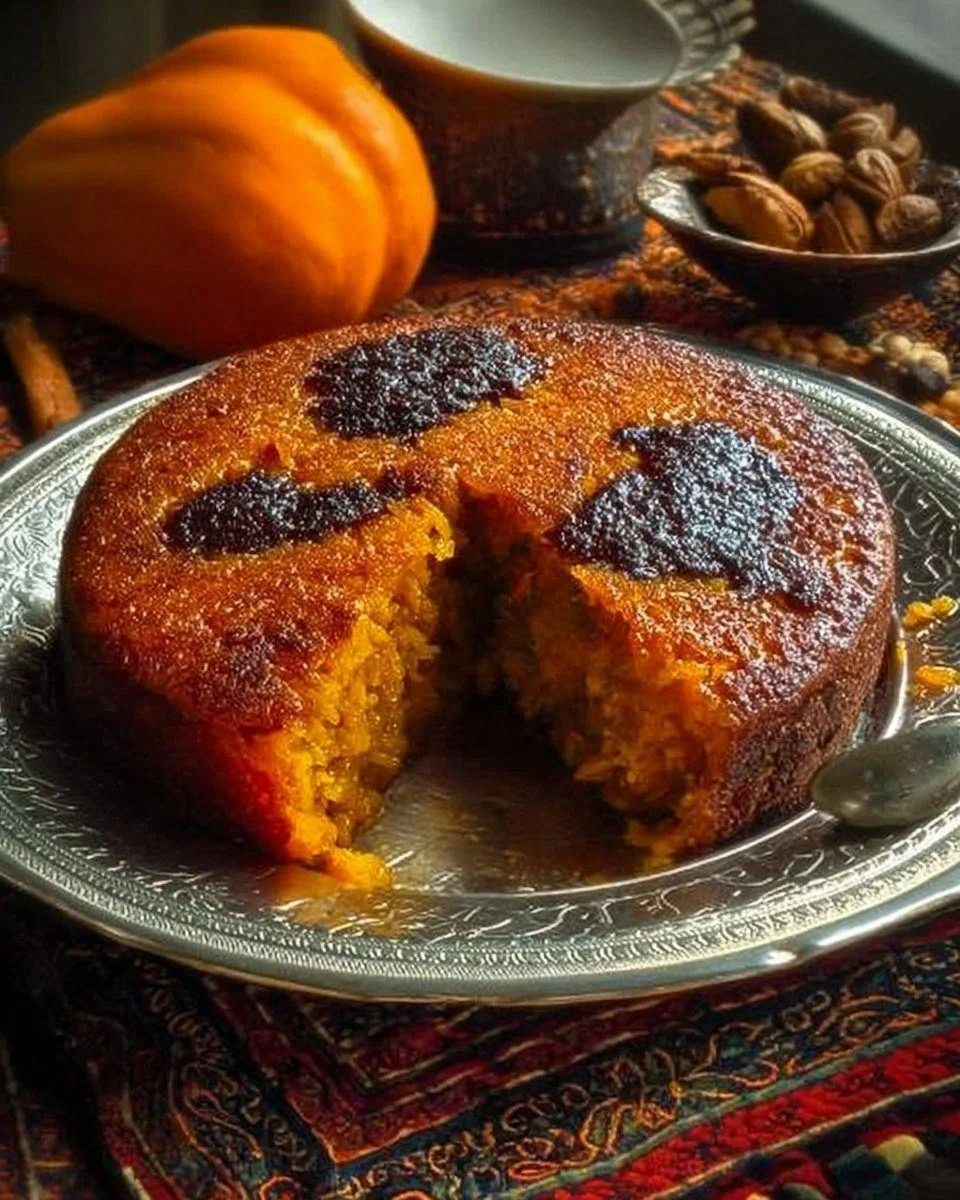
The aroma at this stage should be intoxicating—think Persian spice market meets autumn harvest.Watch Out: Opening the oven door too early can cause the cake to collapse; trust the timer.Remove the cake from the oven and let it rest in the pan for 10 minutes. This rest period allows the steam to finish cooking the interior, ensuring a moist crumb. Then, carefully release the springform and transfer the cake to a serving platter. The final reveal should be a gorgeous, golden‑brown masterpiece with a crackling seed crust that shatters like thin ice when you cut into it.
Slice the cake into generous wedges and serve warm, perhaps with a dollop of plain yogurt or a drizzle of pomegranate molasses for an extra zing. Picture yourself pulling this out of the oven, the whole kitchen smelling incredible, and your guests leaning in for that first bite. And now the fun part—watch them discover the perfect balance of sweet pumpkin, savory rice, and aromatic spices. That moment when they say, “I’ve never had anything like this,” is pure culinary gold.
That's it — you did it. But hold on, I've got a few more tricks that'll take this to another level...
Insider Tricks for Flawless Results
The Temperature Rule Nobody Follows
Never bake this cake at a temperature lower than 350°F; the heat is what creates that coveted golden crust and keeps the interior moist. If you lower the temp, the cake dries out before the seeds can crisp. A friend once tried a “low‑and‑slow” approach and ended up with a soggy, unappetizing slab that fell apart on the plate. Trust the heat, and you’ll get that perfect crackling seed top that shatters like thin ice.
Why Your Nose Knows Best
Your sense of smell is a better indicator than a timer when the spices are done. When the cumin and turmeric hit that deep, earthy scent, you know the flavor base is ready. If you rely solely on minutes, you risk over‑toasting and turning the spices bitter. So stay close, inhale deeply, and let your nose guide you to aromatic perfection.
The 5‑Minute Rest That Changes Everything
After baking, let the cake sit for at least five minutes before slicing. This short rest lets the steam redistribute, preventing a dry crumb and ensuring each slice holds together. I once sliced it immediately and watched the interior crumble like a sandcastle—lesson learned. The rest also allows the flavors to meld, making each bite richer.
Seed Toasting Secrets
If you love extra crunch, toast the seeds in a dry skillet for 2‑3 minutes before sprinkling them on top. This extra step deepens their nutty flavor and adds a buttery finish that pairs beautifully with the pumpkin’s sweetness. Just watch them closely; they can go from golden to burnt in seconds.
Herb Timing Mastery
Add fresh herbs at the very end of mixing, not during the sauté. This preserves their bright color and fresh flavor, preventing them from wilting into a dull green mush. I once blended them in early, and the final cake tasted like a wilted garden—definitely not the experience I wanted.
Rice Rinse Ritual
Rinsing the rice removes surface starch that can make the batter gummy. Skip this step, and you’ll end up with a cake that feels like a sticky rice pudding, not the light, airy texture we’re after. A quick rinse under cold water, followed by a 15‑minute soak, is the secret handshake of every successful rice‑cake maker.
Creative Twists and Variations
This recipe is a playground. Here are some of my favorite ways to switch things up:
Spicy Saffron Surprise
Add a pinch of saffron threads soaked in warm water to the batter for a subtle floral note and a gorgeous amber hue. Pair with a dash of cayenne for a gentle heat that nudges the palate. This version shines at dinner parties where you want to impress with exotic flair.
Cheese‑Lover’s Dream
Stir in ½ cup of crumbled feta or goat cheese just before baking. The cheese melts slightly, creating pockets of salty creaminess that contrast beautifully with the sweet pumpkin. Ideal for brunch gatherings where you want a savory‑sweet balance.
Nutty Quinoa Boost
Replace half of the rice with cooked quinoa for added protein and a slightly nutty texture. The quinoa’s lightness keeps the cake from becoming too dense, and it adds a subtle crunch that complements the roasted seeds.
Coconut‑Caramel Fusion
Swap half the oil for coconut milk and drizzle a thin layer of caramelized coconut sugar on top before baking. The result is a sweet‑savory hybrid that feels like a dessert masquerading as a side dish. Perfect for holiday tables where sweet and savory mingle.
Herb‑Infused Variations
Try swapping parsley for dill and mint for cilantro to give the cake a fresh, garden‑like profile. The dill adds a subtle anise note, while cilantro brings a citrusy brightness that lifts the entire dish.
Storing and Bringing It Back to Life
Fridge Storage
Allow the cake to cool completely, then wrap it tightly in plastic wrap or store in an airtight container. It will keep fresh in the refrigerator for up to 4 days. When ready to serve, reheat a slice in a skillet over medium heat, adding a tiny splash of water to create steam that revives the crumb.
Freezer Friendly
Slice the cake into individual portions, wrap each piece in parchment paper, then place them in a freezer‑safe bag. Freeze for up to 2 months. To reheat, thaw overnight in the fridge, then bake at 350°F for 10‑12 minutes or microwave briefly, again adding a splash of water to prevent drying.
Best Reheating Method
The oven is your best friend for reheating: preheat to 325°F, place the slice on a parchment‑lined tray, and cover loosely with foil for 8 minutes, then uncover for another 4 minutes to crisp the seed crust. This method restores the original texture without making the cake rubbery.