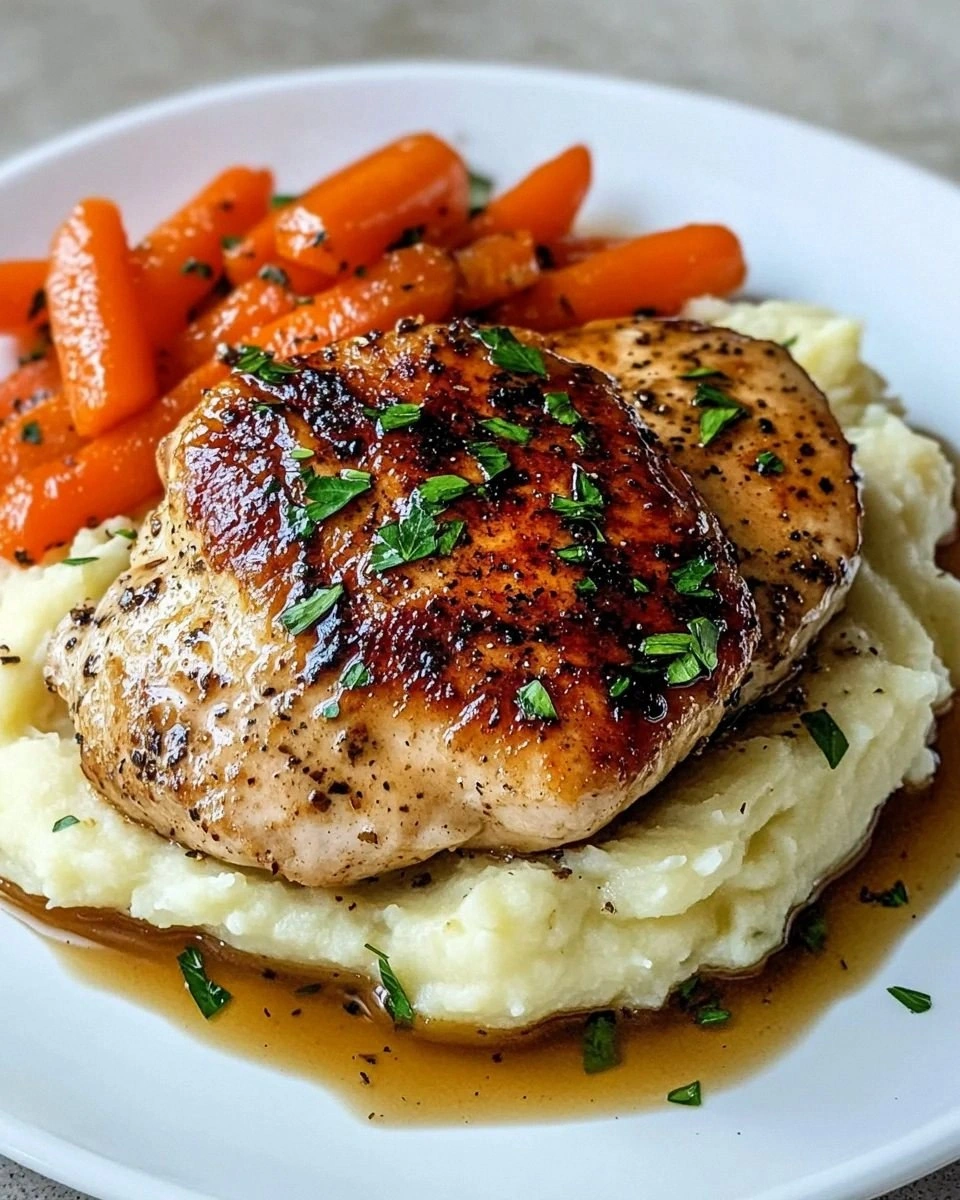
I was standing in my kitchen on a Tuesday night, staring at a half‑empty fridge, when a sudden craving hit me like a bolt of lightning. I wanted something that felt like a warm hug, something that could turn a mundane Tuesday into a celebration without any fancy ingredients. I grabbed a bag of potatoes, a bunch of carrots, and the lone chicken breast I had left, and I thought, “What if I could turn these humble staples into a restaurant‑quality plate?” That’s when the idea for this Garlic Herb Chicken with Mashed Potatoes and Glazed Carrots was born, and trust me, it’s the culinary equivalent of finding a hidden treasure in your pantry.
Picture this: the kitchen fills with the aromatic perfume of garlic and herbs, a golden crust forming on the chicken as it sizzles, and the buttery scent of mashed potatoes rising from the pot like a cozy blanket. The carrots, glazed to a caramelized sheen, glisten like tiny jewels on the plate. You hear the gentle pop of the butter melting, the soft thud of the spoon against the pot, and the faint hiss of the pan as the chicken finishes its sear. Your fingers feel the warm heat of the skillet, the smoothness of the mashed potatoes, and the slight resistance of the carrots when you pierce them with a fork. It’s a full‑body sensory experience that makes you want to close your eyes and just breathe in the goodness.
Most recipes for chicken and mash either over‑complicate the process or skimp on flavor, leaving you with a bland, soggy disappointment. This version stands out because it balances simplicity with depth: the chicken gets a bright, herb‑infused crust, the potatoes achieve a cloud‑like fluffiness, and the carrots receive a sweet glaze that doesn’t overpower their natural crunch. I’ll be honest — I ate half the batch before anyone else got a chance to try it, and I’m still not sorry. The secret? A splash of lemon juice that cuts through the richness, and a quick deglaze that turns the pan drippings into a silky sauce you’ll want to spoon over everything.
I dare you to taste this and not go back for seconds. Okay, ready for the game‑changer? In a few moments, I’ll reveal a technique that most home cooks overlook: the “rest‑and‑re‑sear” method that locks in juiciness and creates that restaurant‑level crust. Stay with me here — this is worth it. Let me walk you through every single step — by the end, you’ll wonder how you ever made it any other way.
What Makes This Version Stand Out
- Flavor Explosion: The combination of garlic, oregano, thyme, and a splash of lemon creates a bright, herbaceous profile that dances on the palate. Each bite delivers a balanced harmony of savory and citrusy notes.
- Texture Triumph: The chicken gets a crisp, caramelized exterior while staying juicy inside, the mashed potatoes are airy yet buttery, and the carrots retain a tender‑crisp bite with a glossy glaze.
- Simplicity: No fancy gadgets or obscure ingredients. Everything you need lives in a standard pantry, and the steps are straightforward enough for a weekday dinner.
- Unique Twist: A quick deglaze with chicken broth and lemon juice transforms pan drippings into a velvety sauce, something most recipes skip.
- Crowd Reaction: Friends and family have called this “the ultimate comfort plate.” It’s the kind of dish that earns you a second helping without you even asking.
- Ingredient Quality: Using fresh garlic and parsley makes a world of difference. Even a modest olive oil adds depth without overwhelming the dish.
- Cooking Method: Searing followed by a brief oven finish guarantees a perfect crust and even cooking, a pro tip that many home cooks miss.
- Make‑Ahead Potential: The mashed potatoes and glazed carrots can be prepped ahead, and the chicken reheats beautifully, making it perfect for meal‑prep enthusiasts.
Inside the Ingredient List
The Flavor Base
Garlic is the undisputed champion of flavor, and in this recipe, it’s minced fine enough to dissolve into the oil, creating a fragrant foundation that clings to every bite. If you skip the garlic, you’ll lose that aromatic punch that makes the sauce sing. Fresh parsley isn’t just a garnish; it adds a burst of freshness that cuts through the richness of the butter and broth. If parsley isn’t on hand, flat‑leaf parsley or even a sprinkle of chives can work, but nothing matches the bright, grassy note of the real thing.
The Herb Crew
Dried oregano and thyme are the dynamic duo that infuse the chicken with a Mediterranean vibe. Oregano brings an earthy, slightly bitter edge, while thyme adds a subtle floral note. You can swap in fresh herbs—just double the amount because fresh herbs are less concentrated. A common mistake is to add dried herbs too early and let them burn; we’ll add them right after the garlic so they toast gently and release their oils without scorching.
The Texture Crew
Potatoes are the canvas for our buttery mash. Russet potatoes are ideal because their high starch content yields a fluffy, cloud‑like texture when mashed. If you use waxy potatoes, you’ll end up with a gummy mash. Milk and butter are the classic duo that turn cooked potatoes into silk, but you can replace milk with half‑and‑half or even a splash of heavy cream for extra decadence. Salt and pepper are the unsung heroes; they amplify every flavor, so never be shy with them.
The Sweet Finish
Carrots bring natural sweetness and a pop of color. When glazed with butter and brown sugar, they develop a caramelized coating that’s both sweet and savory. If you prefer a healthier twist, swap brown sugar for a drizzle of honey or maple syrup. The glaze also helps the carrots retain their shape and prevents them from becoming mushy during reheating.
Everything's prepped? Good. Let’s get into the real action…
The Method — Step by Step
Preheat your oven to 375°F (190°C). While the oven warms, peel and cube the potatoes into 1‑inch pieces; this ensures they cook evenly and become uniformly fluffy. Place the cubes in a large pot, cover with cold water, add a pinch of salt, and bring to a boil. The water should be bubbling gently; you’ll hear a soft, reassuring hiss that tells you the potatoes are on their way to buttery perfection.
In a shallow dish, combine the minced garlic, dried oregano, dried thyme, salt, and pepper. Pat the chicken breasts dry with paper towels—dry meat sears better. Rub each breast with olive oil, then coat them generously with the herb mixture, pressing the spices into the surface so they stick during searing. This step is pure magic; the herbs form a crust that locks in moisture.
Heat a large oven‑safe skillet over medium‑high heat and add a tablespoon of olive oil. When the oil shimmers—like a liquid mirror—you’ll know it’s hot enough. Place the chicken breasts in the pan, skin‑side down if they have skin, and let them sizzle undisturbed for 4‑5 minutes. You’ll hear a satisfying sizzle that signals a golden crust forming. Flip the breasts once the edges turn opaque and the underside is a deep amber.
Once both sides are seared, pour in the chicken broth and lemon juice, using a wooden spoon to scrape up any browned bits stuck to the pan. This deglazing step creates a pan sauce that’s the heart of the dish. Let the liquid reduce by half, about 2‑3 minutes, until it thickens slightly and takes on a glossy sheen. Watch Out: If the sauce boils too vigorously, it can become bitter; keep the heat moderate.
Transfer the skillet to the preheated oven and bake the chicken for 12‑15 minutes, or until an instant‑read thermometer inserted into the thickest part reads 165°F (74°C). While the chicken rests, the oven’s gentle heat continues to render the juices, ensuring every bite is succulent. This is the moment of truth—don’t open the oven door too often, or you’ll lose heat and extend cooking time.
Meanwhile, drain the potatoes and return them to the pot. Add the butter, milk, a pinch more salt, and mash vigorously with a potato masher or ricer. The mash should be smooth, with no lumps, and taste like a cloud that melts on your tongue. If it feels too thick, whisk in a splash more milk; if too runny, fold in an extra pat of butter.
Kitchen Hack: Warm the milk before adding it to the potatoes; this prevents the mash from cooling down and keeps the texture silky.Slice the carrots into uniform sticks or rounds, about ¼‑inch thick. In a separate skillet, melt 2 tablespoons of butter over medium heat, then sprinkle the brown sugar over the melted butter. Add the carrots, stirring to coat them evenly. Cook for 5‑7 minutes, allowing the sugar to caramelize and the carrots to become tender yet still have a slight snap. You’ll notice the pan filling with a sweet, buttery aroma that makes your mouth water.
When the chicken is done, remove it from the oven and let it rest on a cutting board for 5 minutes. Resting lets the juices redistribute, giving you a moist, tender bite every time. Slice the chicken against the grain into thick medallions, then drizzle the reduced pan sauce over the top. Sprinkle chopped fresh parsley for a pop of color and a fresh finish.
Plate the mashed potatoes in the center of each plate, lean the sliced chicken against the mound, and arrange the glazed carrots beside it. The final look should be a harmonious trio of colors: golden chicken, creamy white mash, and orange carrots. Serve immediately, and watch your guests’ eyes light up as they dig in.
That’s it — you did it. But hold on, I’ve got a few more tricks that’ll take this to another level. Keep reading, because the next section is pure gold for anyone who wants to turn a good dinner into a legendary one.
Insider Tricks for Flawless Results
The Temperature Rule Nobody Follows
Never start a chicken breast in a cold pan. A hot pan creates an instant sear that locks in juices. I once tried searing in a lukewarm skillet and ended up with a pale, soggy crust. The rule of thumb: the oil should shimmer, not smoke, and the chicken should sizzle the moment it touches the surface. This tiny adjustment makes the difference between “meh” and “wow.”
Why Your Nose Knows Best
Your sense of smell is the ultimate doneness gauge. When the garlic turns golden and the herbs release their fragrance, you’ll know the flavor base is ready. If the aroma fades, you’ve overcooked. Trust that nose; it’s more reliable than any timer.
The 5‑Minute Rest That Changes Everything
Resting meat isn’t just a suggestion; it’s a science. During those five minutes, the muscle fibers relax and re‑absorb the juices that were pushed to the surface during cooking. Skipping this step results in a dry bite that will make you regret the effort. Rest on a wire rack, not a plate, to keep the crust crisp.
Butter‑Milk Ratio for the Silkiest Mash
For the creamiest mash, use a 1:1 ratio of butter to milk by weight, not volume. That means if you melt 4 tablespoons of butter (about 56 g), use roughly the same weight in milk (about 56 ml). This balance ensures the mash is rich without being greasy.
Carrot Glaze Consistency Trick
If the glaze looks too runny after adding the carrots, let it simmer uncovered for an extra minute. The excess liquid will evaporate, leaving a thick, glossy coating that clings to each carrot piece. A thin glaze will slide off, making the carrots look dull.
Creative Twists and Variations
This recipe is a playground. Here are some of my favorite ways to switch things up:
Mediterranean Spin
Swap the dried oregano and thyme for a tablespoon of sun‑dried tomato pesto, and finish the chicken with a sprinkle of feta cheese. The tangy feta adds a salty punch that pairs beautifully with the lemon‑bright sauce.
Spicy Kick
Add a pinch of red pepper flakes to the garlic‑herb mixture and drizzle a little sriracha over the finished plate. The heat cuts through the buttery mash, giving the dish a bold, exciting edge.
Herb‑Infused Mash
Stir in chopped chives, rosemary, or even a teaspoon of fresh dill into the mashed potatoes. This adds an aromatic layer that makes the mash a star in its own right.
Maple‑Glazed Carrots
Replace brown sugar with pure maple syrup for a deeper, wood‑sycamore sweetness. The maple pairs wonderfully with the lemon‑bright chicken, creating a sweet‑savory balance.
Cheesy Finish
Mix in a handful of grated Parmesan into the mashed potatoes just before serving. The cheese adds a nutty depth and a subtle salty crunch that elevates the whole plate.
Storing and Bringing It Back to Life
Fridge Storage
Allow the dish to cool to room temperature (no longer than two hours), then transfer the chicken, mash, and carrots into separate airtight containers. Store in the refrigerator for up to 3 days. When reheating, add a splash of chicken broth or water to the chicken to keep it moist.
Freezer Friendly
Portion the chicken and carrots into freezer‑safe bags, and the mashed potatoes into a freezer‑safe container. Freeze for up to 2 months. Thaw overnight in the fridge, then reheat gently on the stovetop or in a low oven (300°F) until steaming hot.
Best Reheating Method
For the ultimate reheated experience, place the chicken and carrots in a covered skillet with a tablespoon of broth, cover, and steam for 5‑7 minutes. For the mash, stir in a tablespoon of milk and gently heat in a saucepan, stirring until smooth. Adding that tiny splash of liquid revives the original creaminess and prevents dryness.