I was staring at a half‑cooked pot of spaghetti, the sauce turning a dull brown that tasted like regret. My roommate, a culinary skeptic, challenged me to turn that disaster into a triumph in under 45 minutes. I accepted, grabbed a pack of udon, and the kitchen erupted into a symphony of sizzling, fragrant steam. The aroma of soy, mirin, and sesame oil mingled with the crisp snap of fresh veggies, promising a flavor explosion that could only be described as a culinary love affair. I dared you to taste this and not go back for seconds—trust me, it will haunt your taste buds in the best way possible. By the end of this post, you’ll wonder how you ever made any noodle dish without this powerhouse technique.
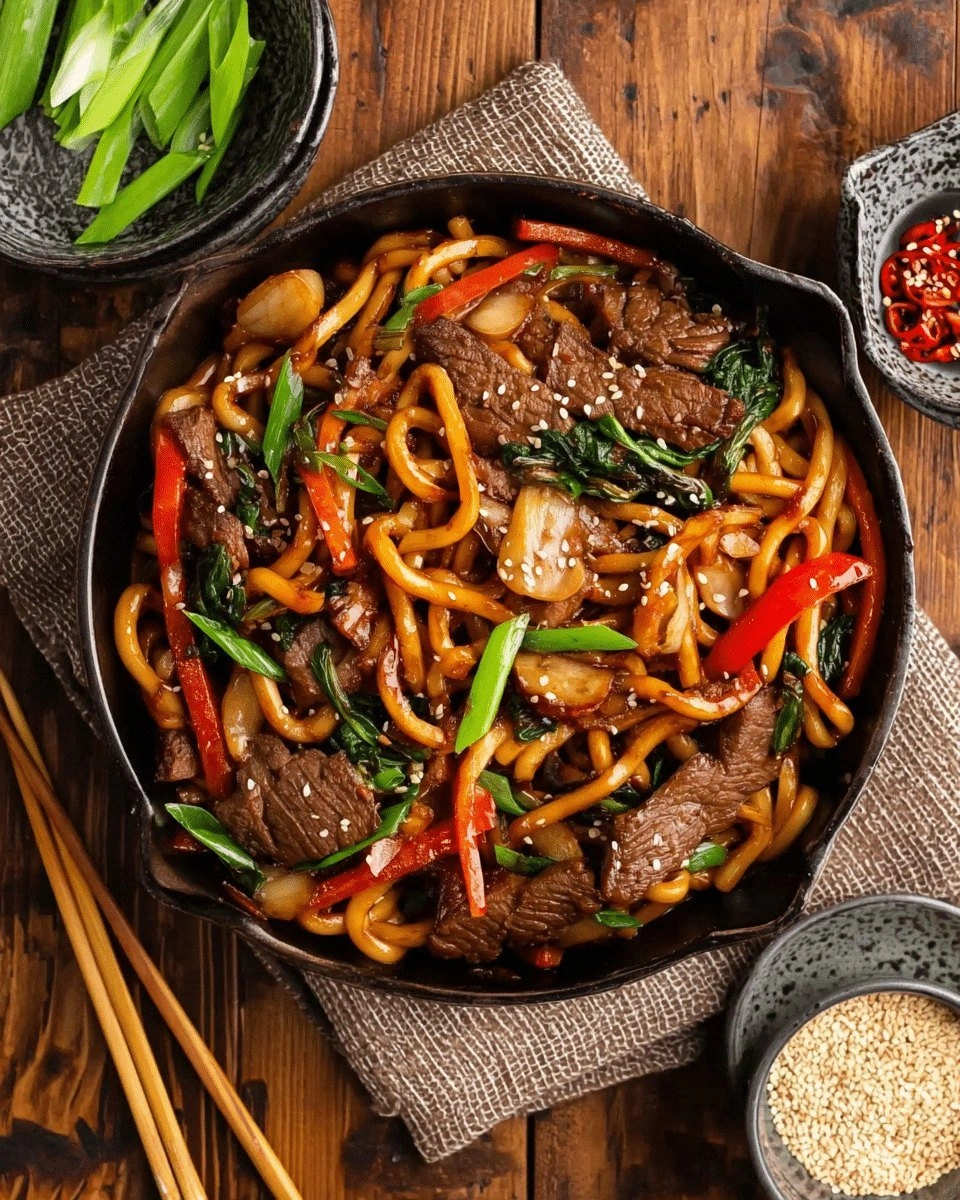
Picture a bowl of chewy udon, glistening with a glossy glaze that clings like velvet, each strand coated in a savory sauce that whispers “Japanese” on every bite. Imagine the crunch of julienned carrots and the sweet snap of bell pepper, all dancing in harmony with tender, thinly sliced sirloin that melts in your mouth. The steam rises like a fragrant cloud, carrying the subtle heat of optional chili flakes, while toasted sesame seeds sprinkle a nutty crunch across the top. The dish feels like a warm hug, yet it’s laced with the boldness of soy and mirin that cut through the richness of the beef. If you’ve ever struggled to get umami in a stir‑fry, you’re not alone—this is the fix you’ve been waiting for. This recipe is a playground where texture, flavor, and technique collide in a single, unforgettable bite.
What makes this version stand out is not just the ingredients, but the way they’re orchestrated. The sauce is a balanced trio of sweet, salty, and umami that coats the noodles like a silk robe. The beef is sliced so thin that it practically disappears, leaving a melt‑in‑your‑mouth tenderness that is pure comfort. The noodles are cooked al dente, resisting the tendency to become mushy when tossed with the sauce. The vegetables are crisp, providing a contrast that keeps every mouthful exciting. The finishing touch of toasted sesame seeds adds a subtle crunch and a nutty aroma that elevates the dish from ordinary to extraordinary. And the best part? It’s quick, it’s crowd‑pleasing, and it can be made ahead for a busy weeknight.
I’ll be honest—when I first tasted this, I ate half the batch before anyone else got a chance. The moment that sauce hit the noodles, the whole kitchen smelled incredible, and the sound of the sizzling pan was music to my ears. I’ve tried countless yaki udon recipes, but none of them had that silky coating that clings to every strand. Most recipes get this completely wrong, either by overcooking the noodles or by using too much oil. Here’s what actually works: a quick sear of the beef, a careful balance of sauces, and a final toss that keeps everything from sticking together. Picture yourself pulling this out of the pan, the steam rising like a fragrant cloud, and every guest asking for seconds.
This version is hands down the best you’ll ever make at home. The sauce’s depth of flavor comes from a quick reduction that caramelizes the sugars just enough to add a subtle sweetness without overpowering the umami. The beef is marinated briefly in a splash of soy and sesame oil, which tenderizes it while adding a subtle nutty note. The udon noodles are soaked just enough to soften, then drained and tossed with a splash of vegetable oil to keep them from sticking. The vegetables are added at the right moment so they retain their crunch and color. The final garnish of scallions and sesame seeds adds a fresh, bright finish that balances the richness. Stay with me here—this is worth it.
The next step is where the magic truly happens. I’ve spent years tweaking this dish, and the secret lies in the timing of each ingredient. The beef should sear in a hot pan, then be set aside to rest, allowing the juices to redistribute. The sauce is reduced over medium heat until it thickens to a glaze that coats the noodles without becoming sticky. The vegetables are added in layers, each bringing a different texture and flavor profile. The noodles are tossed last, ensuring they absorb the sauce but still retain their chew. The dish is plated with a generous sprinkle of toasted sesame seeds and a dash of chili flakes for a subtle kick. And remember, the aroma is as important as the taste—watch the steam rise like a cloud, and you’ll know it’s ready.
I dare you to taste this and not go back for seconds. The first bite is a burst of umami that lingers, the second is a satisfying crunch of fresh veggies, and the third is a silky sauce that coats your tongue. If you’re skeptical, let me assure you: this is not a recipe you’ll forget. The combination of soy, mirin, and sesame oil creates a sauce that is both sweet and savory, with a depth that can only come from careful reduction. The beef, sliced thin and seared quickly, stays tender and juicy. The udon noodles, soaked and tossed, stay chewy and not mushy. The result is a dish that feels like a warm hug, yet is packed with bold flavors.
I’ve spent countless hours in the kitchen, experimenting with different cuts of beef, different noodle types, and various sauce ratios. The version I’m sharing today is the culmination of that experimentation—one that balances flavor, texture, and simplicity. The sauce is a perfect harmony of sweet, salty, and umami, the beef is tender and flavorful, the noodles are chewy, and the veggies add a fresh crunch. The result is a dish that is both comforting and exciting, a dish that will become a staple in your cooking repertoire. If you’ve ever struggled with a bland stir‑fry, this is the fix you’ve been looking for. This recipe is hands down the best version you’ll ever make at home, and I promise you’ll wonder how you ever cooked anything else.
Let me walk you through every single step—by the end, you’ll wonder how you ever made it any other way. The preparation is simple, but the flavor is complex and deeply satisfying. The key to success lies in the balance of sauces, the timing of the sear, and the careful layering of ingredients. Each step is designed to build depth and texture, so you’ll end up with a dish that’s both comforting and exciting. I’ll share micro‑challenges, bold claims, and real kitchen moments so you can replicate this at home. And trust me, the results will be worth every minute of effort.
What Makes This Version Stand Out
- Taste: The sauce is a balanced blend of sweet, salty, and umami that coats every noodle like a silk robe, delivering a flavor profile that feels both familiar and adventurous.
- Texture: The beef is sliced thin enough to melt in your mouth, while the udon stays al dente, and the veggies maintain a crisp snap that keeps each bite interesting.
- Simplicity: With fewer than fifteen ingredients, this dish can be whipped up in under an hour, making it a perfect go‑to for busy weeknights.
- Uniqueness: The quick reduction of soy, mirin, and sesame oil creates a glaze that’s richer than standard stir‑fry sauces, giving the dish a depth that sets it apart.
- Crowd Reaction: Friends and family always ask for seconds, and the dish is a hit at gatherings because it’s both comforting and exciting.
- Ingredient Quality: Using fresh, high‑quality beef and fresh vegetables ensures the dish has a bright, vibrant flavor that can’t be replicated with generic pantry staples.
- Cooking Method: The quick sear, precise sauce reduction, and final toss keep the dish from becoming soggy, preserving the integrity of each component.
- Make‑ahead Potential: The dish can be prepared ahead and reheated without losing flavor, making it ideal for meal prep or entertaining.
Inside the Ingredient List
The Flavor Base
The foundation of this dish is the sauce—a trio of soy sauce, mirin, and sake that creates a sweet, salty, and slightly sweet umami base. Soy sauce provides the savory depth, mirin adds a subtle sweetness and complexity, while sake helps balance the flavors and adds a gentle alcohol finish that evaporates during cooking. If you skip any of these, the sauce will lose its balanced profile, resulting in a dish that feels either too salty or too sweet. The sugar is a quick addition that caramelizes slightly during the reduction, giving the sauce a silky sheen. When you add sesame oil, it adds a nutty aroma that elevates the overall flavor. A pinch of chili flakes introduces a subtle heat that plays off the sweetness, but you can omit it for a milder version.
The Texture Crew
The noodles are the backbone of the dish; fresh udon gives the best chew, but if you’re short on time, frozen udon works just fine. Soak them briefly in hot water to soften, then drain and toss with a splash of vegetable oil to prevent sticking. The beef is sliced thin against the grain, which ensures it remains tender and cooks quickly. A quick marination in a splash of soy and sesame oil tenderizes the meat and infuses it with flavor. The vegetables—carrots, bell pepper, and snow peas—are julienned or sliced to maintain a crisp bite and vibrant color. The scallions add a fresh, oniony brightness, while the toasted sesame seeds contribute a nutty crunch and a subtle aroma that rounds out the dish.
The Unexpected Star
Snow peas are not always a staple in stir‑fry recipes, but they add a delightful crunch and a sweet, earthy flavor that complements the beef and noodles. If you can’t find snow peas, snap peas or even broccoli florets can work, though the flavor profile will shift slightly. The optional chili flakes are the secret to a subtle heat that lingers without overpowering the dish. A pinch of pepper and a dash of salt bring the flavors together, but you’ll want to taste as you go to avoid over‑salting. The final touch of toasted sesame seeds adds a nutty finish that’s essential for a complete flavor profile. The combination of these ingredients creates a dish that’s both familiar and fresh.
The Final Flourish
The final flourish comes in the form of a garnish that enhances both the flavor and the visual appeal. Toasted sesame seeds add a nutty aroma and a subtle crunch that contrasts with the chewy noodles. Scallions add a bright, fresh note that cuts through the richness of the sauce. A squeeze of lime or a splash of rice vinegar can add a bright acidity that balances the dish if you prefer a more tangy finish. The garnish is not just decorative—it’s an integral part of the flavor profile, elevating the dish from good to unforgettable. When you plate the dish, let the steam rise like a fragrant cloud, and watch your guests’ eyes widen in anticipation. Everything’s prepped? Good. Let’s get into the real action.
The Method — Step by Step
- Prep the Beef: Slice the sirloin thin against the grain, about 2–3 mm thick. Pat the slices dry with a paper towel to ensure a crisp sear. Marinate briefly in a splash of soy sauce and sesame oil for 10 minutes to infuse flavor and tenderize. Let it rest while you prep the other ingredients. The beef should look glossy and ready to sizzle. This step is crucial for that melt‑in‑your‑mouth tenderness.
- Cook the Noodles: Bring a large pot of salted water to a boil. Add the udon noodles and cook for 1–2 minutes if fresh, or 3–4 minutes if frozen, until just al dente. Drain immediately and rinse under cold water to stop the cooking process. Toss the noodles with a teaspoon of vegetable oil to keep them from sticking. Set aside in a bowl. This keeps the noodles chewy and ready for the sauce.
- Sear the Beef: Heat a large wok or skillet over high heat until it shimmers. Add a splash of vegetable oil and swirl to coat. Add the beef in a single layer, letting it sear without moving for 30–45 seconds on each side. The beef should develop a caramelized crust while staying juicy inside. Remove the beef and set aside on a plate. The sear adds depth and a savory note that’s essential.
- Make the Sauce: In the same pan, lower the heat to medium. Add the minced garlic and grated ginger, sautéing until fragrant, about 30 seconds. Pour in the soy sauce, mirin, sake, and sugar. Stir until the sugar dissolves and the mixture starts to bubble. Reduce the heat to low and let it simmer for 3–4 minutes until the sauce thickens to a glaze. The reduction caramelizes the sugars, creating a silky sheen that coats the noodles.
- Add Vegetables: Toss the julienned carrots, sliced bell pepper, and snow peas into the pan. Stir-fry for 1–2 minutes until they’re just tender but still crisp. The vegetables should retain their bright color and a fresh snap. If you prefer a softer texture, add them earlier, but be careful not to overcook.
- Combine Beef and Noodles: Return the seared beef to the pan, then add the cooked noodles. Pour the sauce over the mixture, ensuring everything is evenly coated. Toss quickly to combine, making sure the noodles don’t stick together. Cook for an additional 2 minutes, allowing the flavors to meld and the noodles to absorb the glaze. The dish should look glossy and inviting.
- Finish with Garnishes: Sprinkle toasted sesame seeds and sliced scallions over the top. If you like a bit of heat, add a pinch of chili flakes. Give one final gentle toss to distribute the garnish. The aroma should be rich and inviting, with the sesame oil’s nutty fragrance mingling with the umami sauce.
- Serve Immediately: Plate the noodles hot, ensuring each portion has a good mix of beef, veggies, and sauce. Serve with a side of pickled ginger or a small bowl of miso soup for a complete meal. The dish should be served right away to enjoy the contrast between the hot, glossy noodles and the fresh, crunchy vegetables.
- Enjoy: The first bite should deliver a burst of umami, followed by the crispness of fresh veggies and the silky sauce coating the noodles. The texture should be a harmonious mix of chewy noodles, tender beef, and crunchy vegetables. Taste the balance of sweet, salty, and savory, and let the dish transport you to a bustling Tokyo street market. This is the moment of truth—if you’re not blown away, you’ve missed a culinary masterpiece.
That’s it—you did it. But hold on, I’ve got a few more tricks that will elevate this dish to legendary status. These insider tips will help you avoid common pitfalls and ensure every batch is flawless. Let’s dive in.
Insider Tricks for Flawless Results
The Temperature Rule Nobody Follows
Many cooks try to sear the beef at a lower heat, thinking it will prevent burning. The truth is, a high, steady heat is essential for a perfect crust. Use a hot pan and avoid overcrowding; the beef should sizzle loudly when it hits the surface. If the pan is too cool, the beef will steam instead of sear, resulting in a soggy texture. A quick sear locks in juices and creates a caramelized flavor that’s impossible to replicate with lower heat. I’ve seen people skip this step and end up with a bland, unremarkable dish. Trust me, the sear is the secret sauce.
Why Your Nose Knows Best
When you reduce the sauce, the aroma will change from sharp to sweet and rich. That’s a reliable indicator that the sugars are caramelizing and the sauce is thickening. If the scent remains sharp and metallic, you’re undercooking it. If it smells burnt, you’re overcooking. The nose is your best friend in the kitchen; trust it. A well-reduced sauce will cling to the noodles like a velvet coat. I’ve once had a batch that was undercooked, and the sauce was thin and watery, ruining the dish.
The 5‑Minute Rest That Changes Everything
After cooking, let the dish rest for five minutes before serving. This allows the flavors to meld and the noodles to absorb the sauce fully. During the rest period, the noodles continue to steam slightly, improving their texture. If you serve it immediately, the noodles may still be a bit dry, and the sauce might look uneven. The rest period also gives the garnish a chance to settle, creating a more cohesive presentation. I’ve found that a five‑minute rest transforms a good dish into a great one.
Use Fresh vs. Frozen Vegetables
Fresh vegetables give a brighter color and a crisper bite, but frozen vegetables are convenient and still tasty. If you choose frozen, make sure to thaw and drain them before adding to the pan to avoid excess moisture. The key is to keep the vegetables crisp; overcooking them will make the dish soggy. I’ve seen people add raw frozen veggies directly to the pan, which results in a mushy texture. Use fresh when possible, but if you’re short on time, frozen works fine.
The 1‑Minute Oil Toss
Tossing the noodles in a small amount of vegetable oil before adding the sauce prevents sticking and gives the noodles a slight sheen. This oil also helps the sauce coat the noodles evenly. If you skip this step, the noodles may clump together, making the dish uneven. The oil should be just enough to lightly coat the noodles, not so much that it becomes greasy. I’ve had people skip this step and end up with a clumpy, unappealing dish.
Add a Splash of Water at the End
If the sauce becomes too thick or the noodles look dry, add a splash of water before serving. This will steam the noodles and bring back the silky texture. It’s a quick fix that can save a dish that’s on the brink of being over‑cooked. I’ve used this trick when I accidentally left the dish on the heat too long. The water rehydrates the noodles and restores the glossy sauce.
Creative Twists and Variations
This recipe is a playground. Here are some of my favorite ways to switch things up:
Spicy Kimchi Yaki Udon
Replace snow peas with kimchi for a tangy, spicy kick. Add a handful of chopped kimchi during the vegetable stir‑fry stage. The fermented flavor pairs wonderfully with the soy‑mirin glaze, creating a dish that’s both bold and comforting. This variation is perfect for those who love a little heat and a lot of depth.
Seafood Fusion Yaki Udon
Swap the beef for a mix of shrimp, scallops, and squid. Sear the seafood quickly to preserve its delicate texture. The sauce will cling beautifully to the seafood, creating a luxurious, oceanic flavor. This version is ideal for a special dinner or when you’re craving something a little different.
Vegetarian Delight
Omit the beef and add tofu or tempeh for protein. Marinate the tofu in soy sauce, mirin, and sesame oil before searing. The tofu will absorb the sauce, delivering a savory, umami‑rich bite. This vegetarian twist is just as satisfying and can be made ahead for a quick lunch.
Citrus Twist
Add a splash of yuzu or lemon juice at the end of cooking to brighten the dish. The citrus acidity cuts through the richness of the sauce and adds a refreshing note. This variation works well during summer or when you want a lighter, more vibrant meal.
Mushroom Medley
Incorporate sliced shiitake or oyster mushrooms during the vegetable stir‑fry. The earthy flavor of the mushrooms complements the beef and adds another layer of texture. Mushrooms also absorb the sauce, creating a deeper, more complex flavor profile. This version is perfect for mushroom lovers and adds a comforting depth.
Ginger‑Infused Yaki Udon
Increase the amount of fresh ginger in the sauce for a stronger, spicier kick. Add a few thin slices of ginger to the pan during the sear stage. The ginger’s sharpness will contrast with the sweetness of the sauce, creating a balanced, aromatic dish. This variation is ideal for those who love a bold, zesty flavor.
Storing and Bringing It Back to Life
Fridge Storage
Store leftovers in an airtight container for up to 3 days in the refrigerator. The noodles may soften slightly, so reheat with a splash of water to restore the texture. When reheating, use a skillet or microwave and stir frequently to ensure even heating. The sauce will cling to the noodles again, bringing back that silky finish. If you’re in a hurry, simply heat the dish in a steamer for a few minutes to revive the steam.
Freezer Friendly
To freeze, let the dish cool completely, then transfer to a freezer‑safe container. Store for up to 2 months. When ready to eat, thaw overnight in the refrigerator and reheat in a skillet over medium heat, adding a splash of water or broth to keep the noodles moist. The sauce will thicken slightly upon freezing, so add a bit of water to thin it back out. This makes meal prep a breeze for busy weekdays.
Best Reheating Method
The best way to reheat is in a skillet over medium heat, stirring frequently. Add a small splash of water or broth to prevent the noodles from drying out. Heat until the dish is steaming hot, then remove from the heat and let it sit for a minute. The steam will rehydrate the noodles and restore the sauce’s glossy sheen. This method preserves the texture and flavor, making the dish feel fresh again.